
Sarvavidya Dance Ensemble’s Bhūmi strikes fear – of the catalytic kind – into its audience’s hearts
...

There’s intuitive, age-old wisdom about not letting emotions get in the way of making the right and rational decision. It’s time to throw that out – along with the plastic-embalmed albatross we’ve killed – and quit being an armchair environmental activist.
As a moving performance called ‘Bhūmi’ (‘Earth’ in Sanskrit) by the Sarvavidya Dance Ensemble (SDE) proves in palpable ways, stirring people’s emotions may be the only way to put the ‘ACT’ back into ‘activist’.
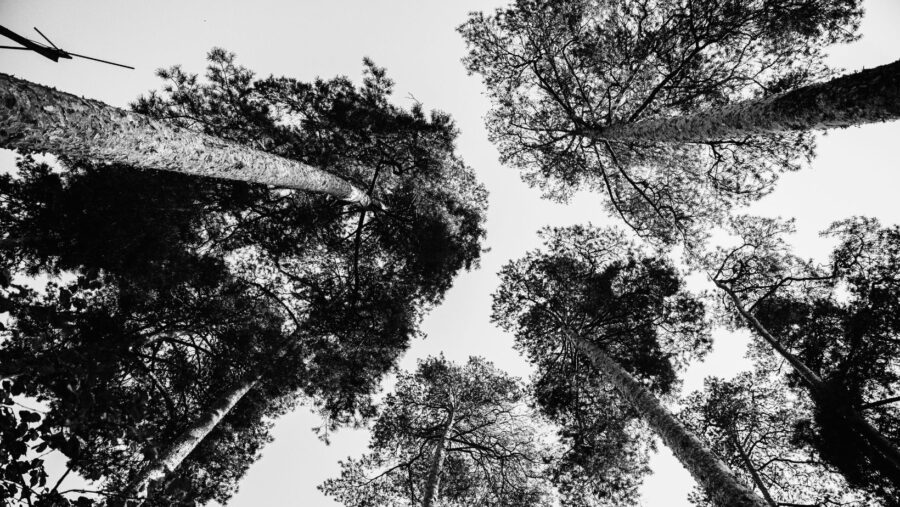
The scent of incense peppers the air. An image of companionable, crown shy trees (a phenomenon as mesmerising as it is mysterious) fills the background. The show begins: the audience is immersed in the recitation of a poem written from a tree’s perspective. The words wail with a sense of eternal authority, but they also manage to portray the tree’s loving grace. Between the first strains of moving Ravi Shankar music, the deep interconnectedness the poem speaks to, and the image of this mysterious marvel, tears can’t help but spring to the eyes.
The SDE troupe, with their exacting movements, eye-catching dress and expressive faces, set the stage for the story that’s about to unfold. As the audience is lured in, there is a deep and profound understanding of the communion we share with all beings. But, in particular, with these beings.
Which is why the fourth scene – the one that starts to detail man’s descent into destroying these benevolent beings – is so heart wrenching, those tears spill out from their wells.
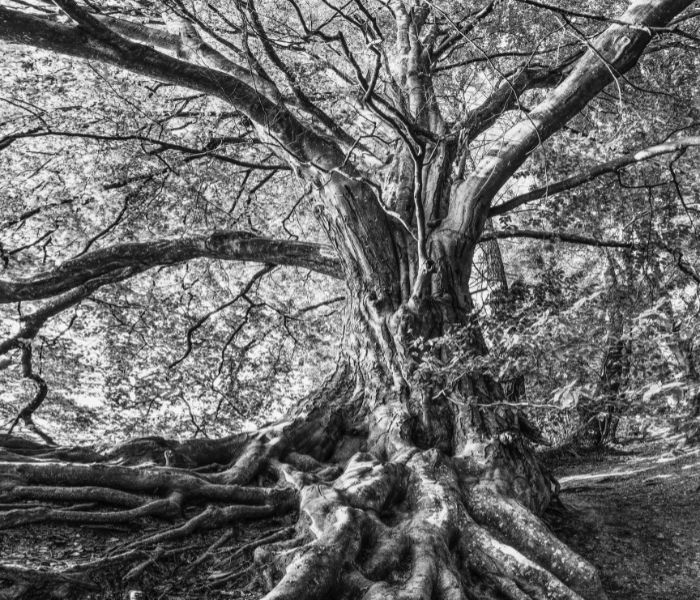
Trees are sanctuaries. Whoever knows how to speak to them, whoever knows how to listen to them, can learn the truth. They do not preach learning and precepts, they preach, undeterred by particulars, the ancient law of life.
Hermann Hesse
As the poetry shifts from the potency of a sacred truth to a pained and perplexed plea, the audience is thrown into the pathos of the situation. The dancers’ facial expressions become more animated. With each depiction of destruction, from hunters capturing marine wildlife to loggers felling trees, the anger, grief and despair in the theatre becomes increasingly palpable.
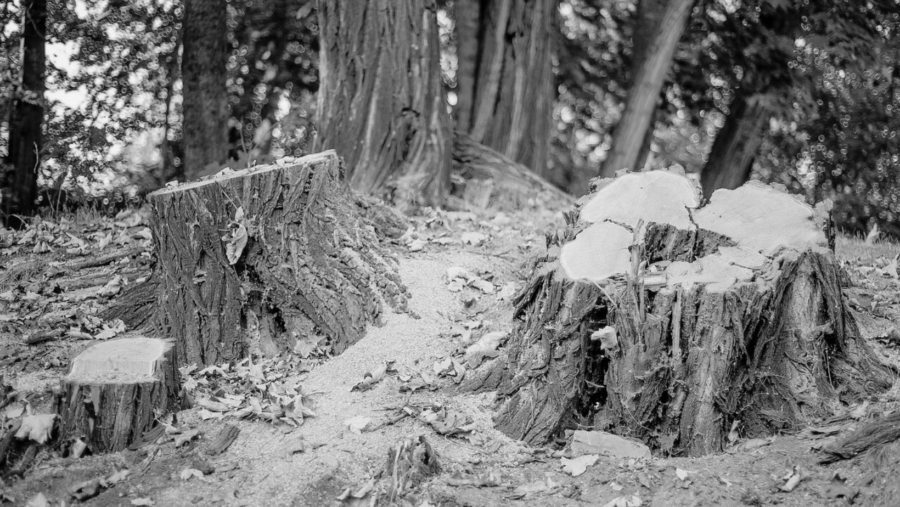
Although the SDE dramatises man’s greed in several arresting ways, its continual return to ‘The Tree’ keeps the tragedy in focus. Near the end of the performance, a chilling scene of an empty forest floor littered with decapitated trees (the ensemble shrouded in mist and forced to their knees) is the final blow.
Although the admiration in the applause after the performance rings clear, there’s a disturbed undercurrent tugging at our enthusiasm. What do we do with the trauma we were just so uncharacteristically forced to face?
When Mark Heywood (Editor for Maverick Citizen, read his account of SDE’s performance) comes on stage and promises that there’ll be an opportunity to process what the audience has just gone through, there’s a sigh of relief.
But Mark’s discussion with environmental activist Malik Dasoo of Extinction Rebellion doesn’t dissipate the dread the audience feels.
With slogans like ‘THIS IS AN EMERGENCY’ and ‘WELCOME TO HELL’, Malik and his organisation are not here to assuage our anxiety.
Malik encourages us to stay scared, stay angry, stay activated. He reckons that’s the only way to be effective activists. And indeed, Extinction Rebellion’s focus is on civil disobedience; Malik was recently arrested while protesting at a Standard Bank (watch this video or read this Daily Maverick article to find out why this important ACTIVE-ism took place).
The key to keeping those emotions stirred so that rational decisions can be made?
Forcing yourself to constantly face the facts. Following Extinction Rebellion is one way to do this.

The moving performance by SDE pulls off something extraordinary: it combines beauty and grace with a truth so harsh, it needs to be mediated by something as atavistic as Bharatanatyam.
PS:
Frodo laid his hand upon the tree beside the ladder: never before had he been so suddenly and keenly aware of the feel and texture of a tree’s skin and of the life within it. He felt delight in wood and the touch of it, neither as forester nor as carpenter; it was the delight of the living tree itself.


